
New Moon Greetings – October 10th, 2026

This month my granddaughter and I continued to explore the process of garden dyes. Magic happens when you watch the colors transform the fiber. This feels especially true when the colors are grown in your own backyard.
For this round of dyeing we used calendula flowers and apple leaves and twigs from the garden. Originally we were going to use red Hopi amaranth, but that will have to wait. Apparently the amaranth works on wool, but not very well on plant materials (flax and cotton). Since we were dyeing a variety of fibers, we tabled the amaranth for now.
 And we also tried another round of indigo. Because our first attempt with Japanese indigo did not result in blue (although we did get a lovely green), we decided to try an indigo kit to learn more about the process.
On Mordants
As I mentioned in my last post, most fibers will not absorb a dye without treating the fibers first with a mordant. The mordant actually binds the dye to the fibers. This process takes place after the fibers are cleaned (scoured) and before they go into the dye bath. Fibers are soaked in the mordant solutions at a warm temperature and then rinsed. Because this is a long process, I did all the scouring and mordanting the week before dyeing.
Apple Leaves & Twigs

In looking through my dye books, I found some pictures of beautiful copper colored wool created with apple leaves and twigs. This was perfect timing since I had just pruned by apple tree and had an abundance of both. I begin soaking the chopped up twigs five days before we planned to dye. Then the evening before, I covered the twigs and leaves with water, brought them to a simmer and let it brew for a few hours. In the morning I started the simmer again for a few more hours. (This creates a wonderful fragrance in the house, a little like apple cider.)

When my granddaughter arrived, we introduced the yarn, a skein of cotton and a skein of wool.And then kept the dye pot warm, but not boiling. After an hour, the dye pot itself was a deep copper color but the skeins were not. That’s when we added 1/2 cup of vinegar. I don’t completely understand the chemistry, but that immediately darkened the fiber colors.
Calendula Flowers

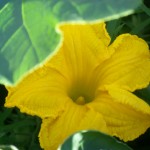
My garden produced an abundance of calendula flowers this summer even with the drought and 100 degree days. I’ve harvested and dried flowers since July. The dye pot was super easy. Weight of the dried flowers matched the weight of the yarn. I added water to cover and  simmered for about two hours. Once we added the yarn, the same thing happened as with the apple dye. The dye pot itself was a golden color but the yarn was not. Once we added 1/2 cup of vinegar the color immediately transferred to the yarn.
Indigo
 Dyeing with indigo is a more complicated process because indican is not
 water soluble. And the brew must be alkaline to even create the blue color. Additionally the blue color does not develop until it is exposed to oxygen. We used a kit this time to learn more about the process. It is best done outdoors (and not in your kitchen) because of the chemicals needed.

We dyed fiber and also tie dyed cotton bandanas. They emerge from the dye bath an emerald green color and then morph into indigo blue. it’s a bit of a challenge to get photos of the green changing to blue, especially when wearing protective gloves. The shift in color happens pretty quickly once the fibers come out of the pot and into the air. Our next steps with indigo dyeing is to create something called a fermented pot, which is a more traditional method. That’s happening soon.
Botanical Dye Alchemy
My gardens have always been about growing more food than flowers, although I have lots of flowering herbs and plants that are good companions for vegetables. But I’m now looking at the garden in a different light, assessing every plant’s ability to dye fibers of one sort of or another. It has been fascinating to explore both the history and the science of garden dyes. And one more reminder of the magic of the natural world. We just have to pay attention.
About this Blog Post & and Qigong Practice

This post is part of my lunar blog series. I post each new moon as it is a great time to begin projects and set intentions with the increasing light. Topics are related to plants and ideas featured in my book, Growing Mindful. Other topics are related to mindfulness, gardens, qigong, and intentional living. For more details and a list of past lunar blog posts, click here.
About Qigong – I lead qigong at Bluff Lake Nature Center in Denver on the last Sunday of each month. You can find the schedule in announcements on the home page. I have also partnered with other graduates of the IIQTC (Institute of Integral Qigong and Tai Chi) to offer virtual HeART of Body Compassionate Self Care Practice Circles based on qigong and tai chi. Check out the information here: Global Healing Circles or contact me if you need more information.